Choosing a reliable refrigerant supplier is one of the most critical operational decisions for your HVAC business. Because refrigerants are tightly regulated, chemically sensitive, and highly vulnerable to market fluctuations, your choice of supply partner directly impacts your profitability, compliance, and corporate reputation.
Here is a strategic guide on how to evaluate and select the right wholesale refrigerant supplier for your business.
1. Verify Absolute Product Authenticity and Purity
The global market frequently encounters counterfeit, contaminated, or low-purity refrigerant gases. Using subpar gas can lead to severe compressor failure, reduced system efficiency, and costly warranty claims for your clients.
- Demand Documentation: A reputable supplier must always provide a certified Certificate of Analysis (CoA) for every batch, guaranteeing $99.9\%$ chemical purity.
- Look for Anti-Counterfeiting Measures: Ensure the cylinders feature verifiable security holograms and come from authorized, top-tier global manufacturers (such as Chemours, Honeywell, or Westron).
2. Evaluate Regulatory Compliance and Licensing
Refrigerant distribution is heavily governed by strict environmental frameworks like the EPA’s AIM Act or European F-Gas regulations. Partnering with a non-compliant supplier exposes your business to massive legal liabilities and sudden inventory disruptions.
- Check Certification: Verify that the supplier is fully licensed to handle, sell, and transport Class 2.2 hazardous pressurized gases.
- Cylinder Standards: Ensure all portable cylinders strictly adhere to transport regulations (such as DOT-39 standards for non-refillable tanks or relevant AHRI color-coding guidelines).
3. Assess Supply Chain Stability and Inventory Depth
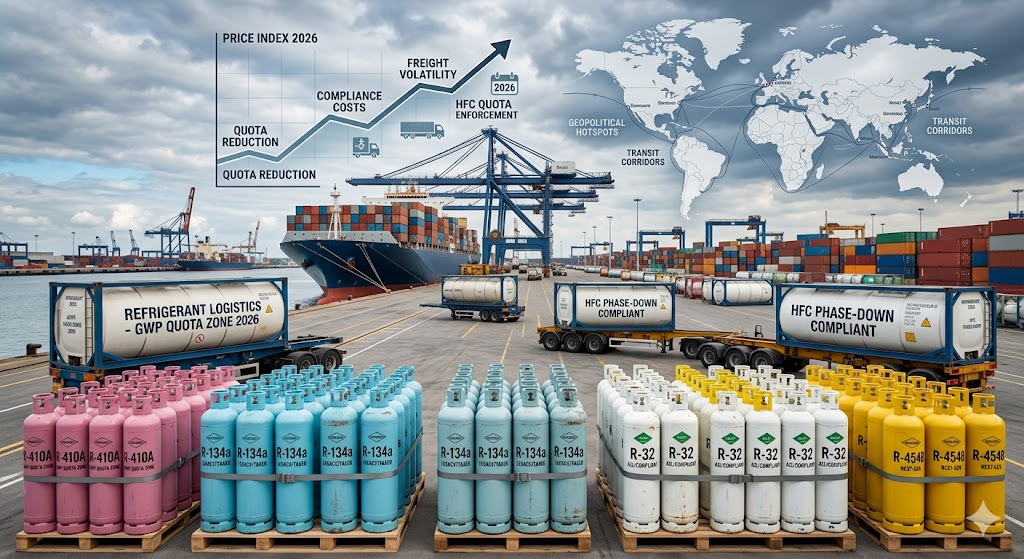
Fluctuating production quotas mean that high-GWP (Global Warming Potential) gases like R410A are facing rapid phase-downs, while next-generation options like R32 are surging in demand. Your supplier must be equipped to handle this transition smoothly.
- Bulk and FCL Capabilities: Can they consistently supply full container loads (FCL) or mixed pallets during peak summer seasons?
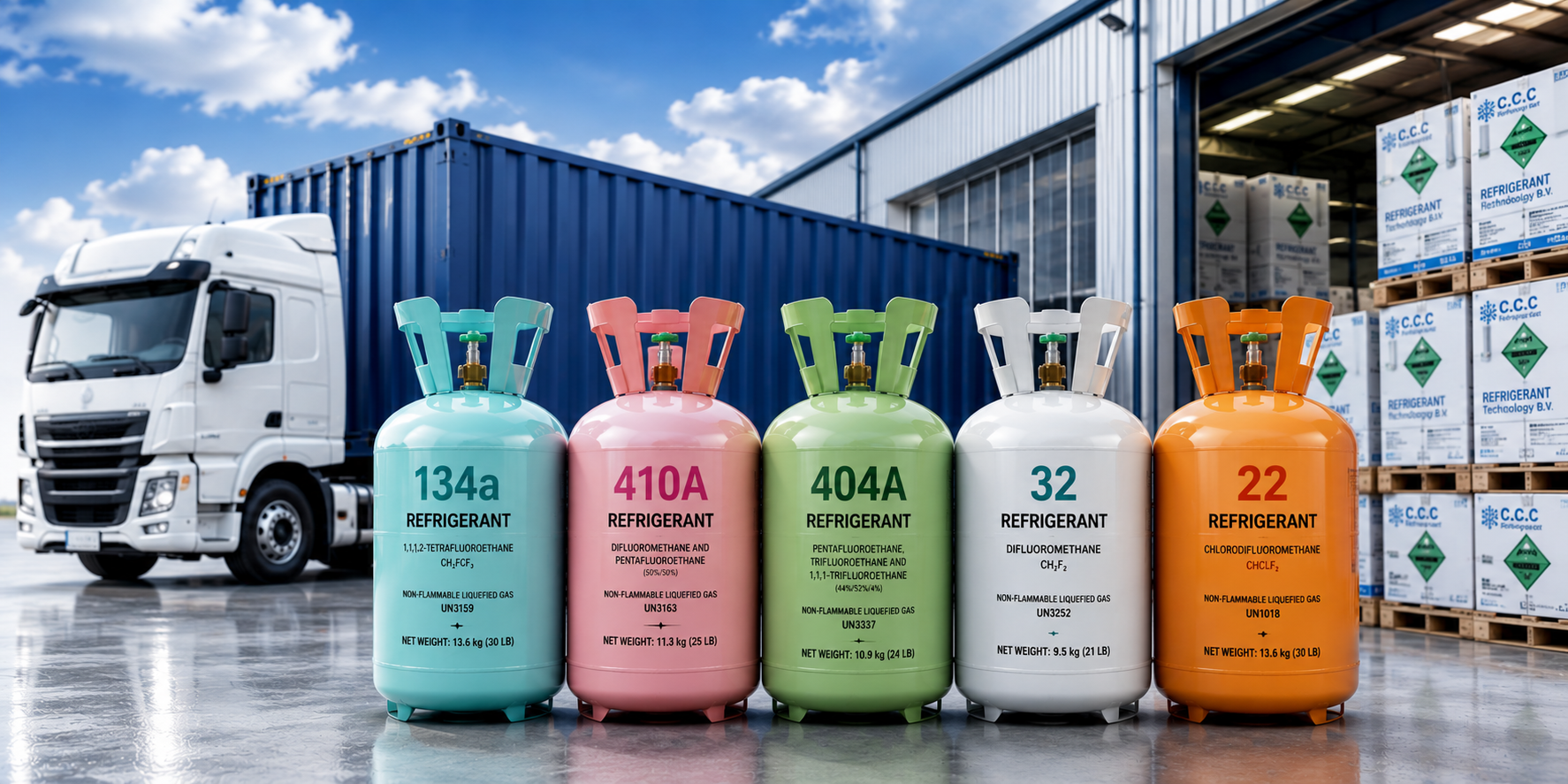
- Diverse Portfolio: Look for a supplier that maintains a deep stock of legacy gases for retrofits alongside a steady pipeline of next-gen hydrofluoroolefins (HFOs) and A2L mildly flammable options.
4. Analyze Total Landed Costs (Not Just Cylinder Prices)
An incredibly low per-cylinder price can quickly be erased by hidden logistical overheads. When comparing wholesale suppliers, always evaluate the total landed cost.
- Logistics and Shipping: Ask for transparent freight quotes. Elite suppliers have robust partnerships with freight forwarders to minimize ocean or road transit fees.
- Port and Storage Fees: Choose a supplier with efficient customs clearance protocols to help you avoid costly demurrage or unexpected port storage fees.
5. Review Packaging and Delivery Flexibility
HVAC businesses have diverse operational scales. Your supplier’s packaging options should align with your specific distribution or field service needs.
| Service Scale | Ideal Packaging Type | Supplier Requirement |
| Field Service Fleets | Portable 25 lb (11.3 kg) cylinders | Lightweight, secure valve handles, easily stackable |
| Commercial Chillers / Industrial | Heavy-duty refillable ton tanks | Certified valves, strict hydrostatic testing history |
| Wholesale / Large Distribution | ISO Tank Containers | Streamlined port logistics and bulk transfer compliance |
Technical Safety Checklist for On-Boarding a Supplier
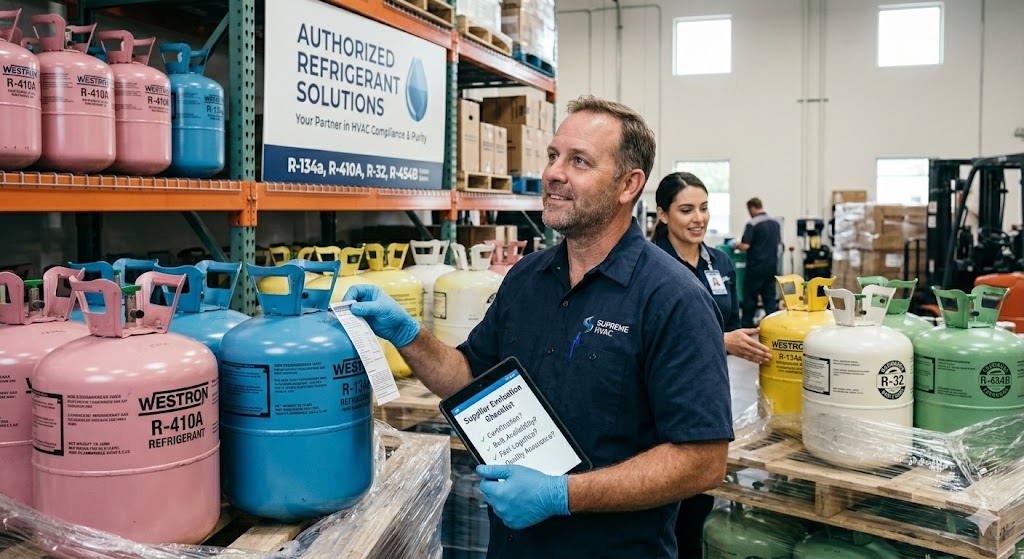
Before signing a long-term procurement contract, run through this quick operational checklist with the supplier’s technical team:
- [ ] Do all cylinders include comprehensive safety labeling and accessible Safety Data Sheets (SDS)?
- [ ] Are the valves and pressure-relief devices rated to handle the higher operating pressures of gases like R410A and R32 safely?
- [ ] Does the supplier offer a cylinder return or reclamation program for used/recovered refrigerant gases?
By prioritizing chemical purity, regulatory track records, and transparent supply chain logistics over rock-bottom pricing, you ensure that your HVAC business maintains a flawless operational reputation and a steady, uninterrupted supply of essential gases.
Are you looking to source refrigerants for a specific market—like automotive climate control or large-scale industrial cold storage—so we can tailor your procurement criteria?