The global heating, ventilation, and air conditioning (HVAC) industry is undergoing a massive transformation. Driven by evolving international environmental regulations and technological breakthroughs, the chemical compounds cooling our homes, vehicles, and commercial spaces are shifting rapidly.
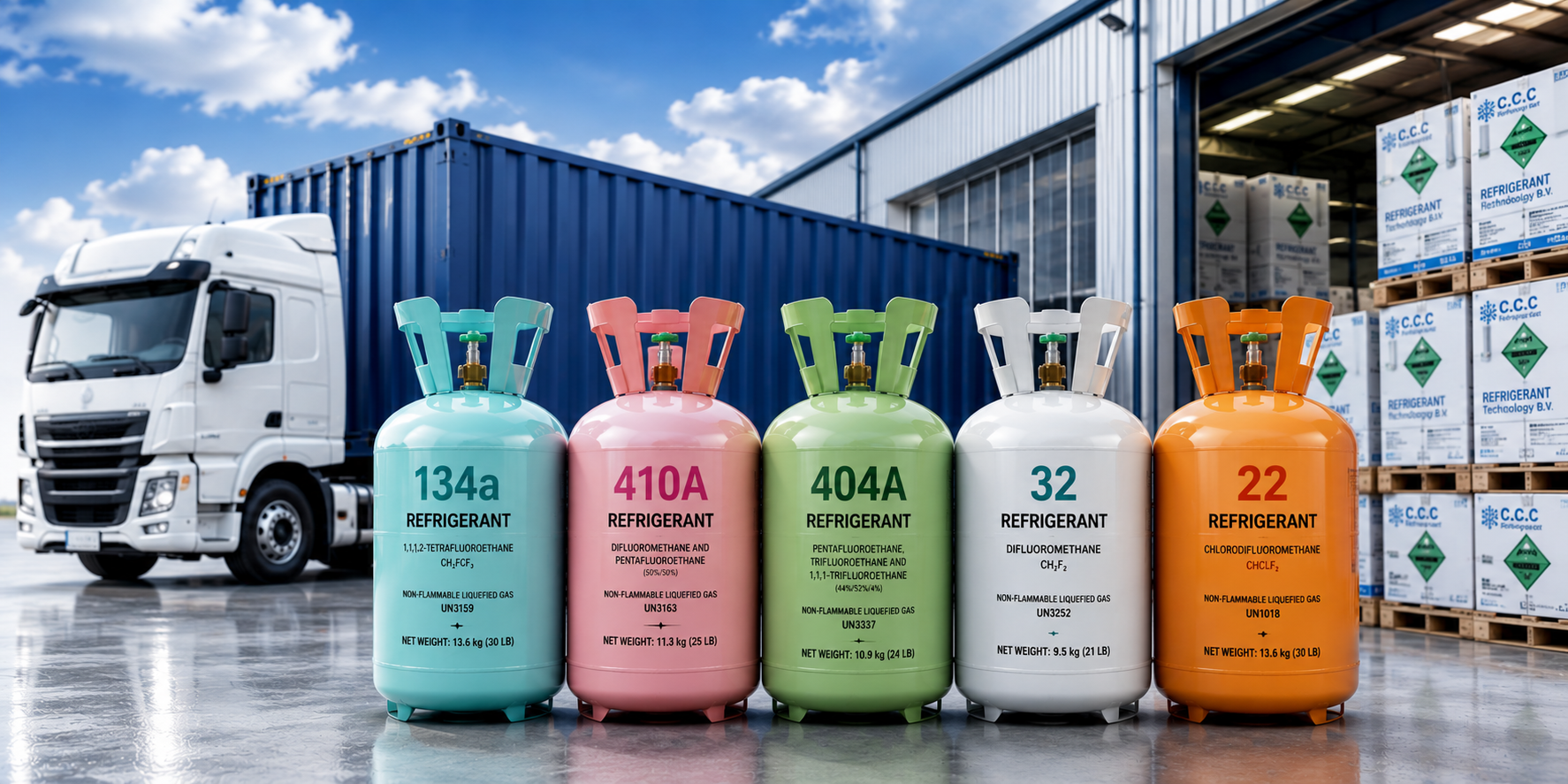
For property owners, automotive technicians, and commercial procurement managers alike, understanding the structural differences between dominant refrigerant gases is essential. This comprehensive guide breaks down the chemical properties, system efficiencies, and regulatory landscapes of the three most widely used refrigerants today: R134a, R410A, and R32.
The Core Indicators: ODP and GWP Explained
Before evaluating individual gases, it is vital to understand the two core metrics used by environmental agencies like the EPA and European Commission to regulate chemical refrigerants:
- Ozone Depletion Potential (ODP): A relative scale measuring the amount of degradation a chemical causes to the stratospheric ozone layer. The baseline benchmark is set at $1.0$ using CFC-11. Modern hydrofluorocarbons (HFCs) feature an ODP rating of zero ($0$).
- Global Warming Potential (GWP): A metric tracking the atmospheric heat-trapping capability of a gas over a specific timeframe (usually 100 years) relative to Carbon Dioxide ($CO_2$, which has a baseline GWP of $1$). A higher GWP rating indicates a more potent greenhouse gas.
1. R134a: The Automotive and Commercial Standard
Chemical Profile & Physical Behavior
R134a (1,1,1,2-Tetrafluoroethane) is a pure, single-component hydrofluorocarbon (HFC) refrigerant. Introduced in the early 1990s as a mandatory safety replacement for the highly destructive chlorofluorocarbon R12, it completely eliminates ozone depletion. Because it is a single-gas compound, R134a displays zero temperature glide. If a physical leak occurs in a system, the chemical integrity of the remaining vapor stays perfectly uniform, allowing technicians to top off charging lines repeatedly without a full system flush.
Principal Applications
- Automotive Climate Systems: The dominant factory-fill refrigerant for passenger vehicles manufactured between 1994 and the late 2010s.
- Commercial Chillers: Extensively utilized in large-scale centrifugal chillers for high-capacity industrial facility cooling.
- Domestic Appliance Care: Found in residential refrigerators, standalone food freezers, and consumer water dispensers.
Performance Data
- ASHRAE Safety Classification: A1 (Non-flammable, low toxicity)
- Ozone Depletion Potential (ODP): 0
- Global Warming Potential (GWP): 1,430
- Lubricant Compatibility: Polyalkylene Glycol (PAG) for automotive; Polyolester (POE) Oils for industrial setups.
2. R410A: The Residential Air Conditioning Workhorse
Chemical Profile & Physical Behavior
R410A is a near-azeotropic zeotropic mixture composed of two distinct HFC compounds mixed in an exact 50/50% proportion by weight: Difluoromethane ($R32$) and Pentafluoroethane ($R125$). It features a negligible temperature glide of less than 0.17°C (0.3°F). This structural stability ensures the blend behaves virtually like a single-component gas during standard phase changes.
Crucially, R410A operates at 50% to 60% higher pressures than older legacy systems like R22. Consequently, it requires thicker tubing walls, distinct high-pressure manifold gauges, and robust scroll compressors engineered to withstand severe operating stresses.
Principal Applications
- Residential Split Systems: The primary cooling agent inside residential central air conditioners and modern heat pumps.
- Commercial HVAC Units: Widely deployed in rooftop air handlers, variable refrigerant flow (VRF) commercial loops, and package units.
Performance Data
- ASHRAE Safety Classification: A1 (Non-flammable, low toxicity)
- Ozone Depletion Potential (ODP): 0
- Global Warming Potential (GWP): 2,088
- Lubricant Compatibility: Synthetic Polyolester (POE) Oils exclusively.
3. R32: The Next-Generation Efficiency Frontier
Chemical Profile & Physical Behavior
R32 (Difluoromethane) is a pure, single-component HFC gas that serves as both a standalone refrigerant and a critical foundational component of multi-gas blends (such as R410A). It marks a massive leap forward in thermodynamic efficiency, possessing a volumetric cooling capacity roughly 20% higher than R410A. Because it requires a significantly smaller system charge volume (often 30% less chemical mass for identical cooling outputs), HVAC hardware can be manufactured with a more compact physical footprint.
The defining operational shift with R32 is its safety profile. Unlike its predecessors, it carries an A2L safety rating, meaning it is classified as mildly flammable. It requires a high ignition energy threshold and burns at a very slow velocity, but service tools, recovery machinery, and vacuum pumps must be certified sparkless and explosion-proof to ensure on-site mechanical safety.
Principal Applications
- Next-Gen Air Conditioners: Increasingly adopted by elite global manufacturers for residential split systems, window units, and high-efficiency inverter heat pumps.
Performance Data
- ASHRAE Safety Classification: A2L (Mildly flammable, low toxicity)
- Ozone Depletion Potential (ODP): 0
- Global Warming Potential (GWP): 675 (A 67% reduction compared directly to R410A)
- Lubricant Compatibility: Specialized Polyolester (POE) Oils optimized for A2L compounds.
Direct Technical Comparison
To clarify the operational and regulatory differences across these vital compounds, view this core metrics overview:
| Technical Property Metric | R134a | R410A | R32 |
| Chemical Composition Type | Pure HFC Gas | Near-Azeotropic Blend | Pure HFC Gas |
| Operating Pressure Level | Medium | High | Very High |
| Relative Cooling Efficiency | Moderate | High | Excellent ($+20\%$ vs R410A) |
| Flammability Rating | Non-Flammable (A1) | Non-Flammable (A1) | Mildly Flammable (A2L) |
| Environmental GWP Rating | 1,430 | 2,088 | 675 |
Supply Chain Realities and Regulatory Phase-Downs
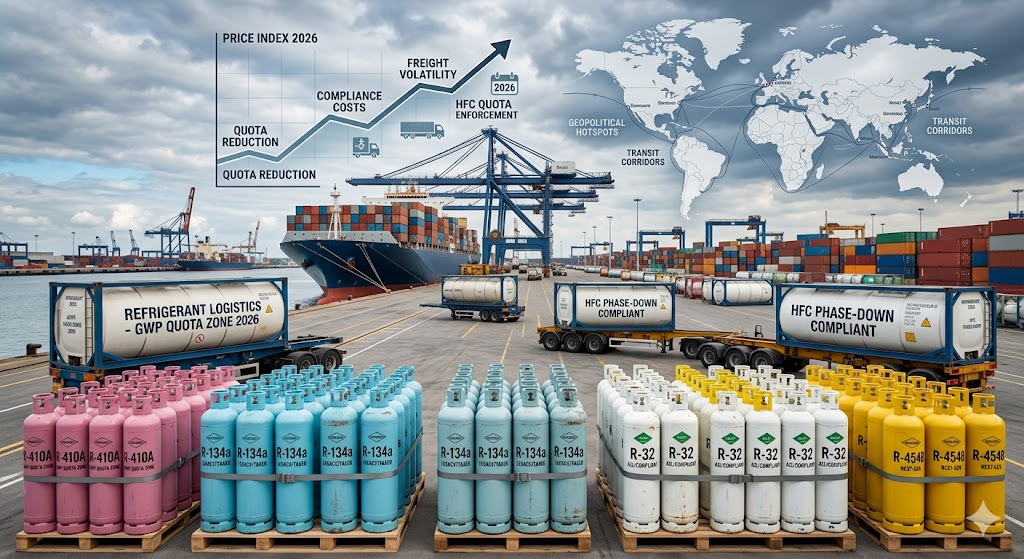
The commercial market value of these gases is heavily dictated by international treaties like the Kigali Amendment to the Montreal Protocol and domestic laws such as the U.S. American Innovation and Manufacturing (AIM) Act. These pieces of legislation are actively forcing a phased production reduction of high-GWP hydrofluorocarbons.
- The R410A Outlook: Due to its elevated GWP of 2,088, R410A production quotas are dropping rapidly across developed nations. While existing residential air conditioners can legally be serviced using recycled or allocated bulk stockpiles, new equipment designs have aggressively shifted toward R32 or R454B.
- The R134a Transition: In the automotive sector, R134a has been largely phased out of new consumer models in favor of HFO-1234yf, a hydrofluoroolefin variant with an ultra-low GWP rating of less than 1. However, it remains a highly vital, high-volume asset for retrofitting legacy vehicles and maintaining older commercial chilled water installations globally.
- The R32 Paradigm: Positioned as a dominant mid-term solution, R32 provides an immediate, legally compliant pathway for balancing high operational energy efficiency with reduced carbon footprints.
Understanding these chemical profiles allows commercial buyers, fleet managers, and mechanical service agencies to make forward-thinking infrastructure investments, avoiding premature equipment obsolescence while securing the highest possible cooling performance.